29 September 2026 · Reporting checked against Reuters and official Paris Fashion Week sources below.
MaXhosa Africa has turned a long Paris courtship into a runway milestone. On 28 September, Laduma Ngxokolo’s South African fashion house staged its first full runway show on the official Paris Fashion Week calendar — a step Reuters reports makes MaXhosa the first South African brand to do so.
The distinction is more than semantics. MaXhosa has presented in Paris for years, but the Fédération de la Haute Couture et de la Mode describes this as the label’s runway debut after five Paris presentations. Its official calendar listed the house as a 17:00 “Show by invitation” on the opening day of the Spring/Summer 2027 womenswear week.
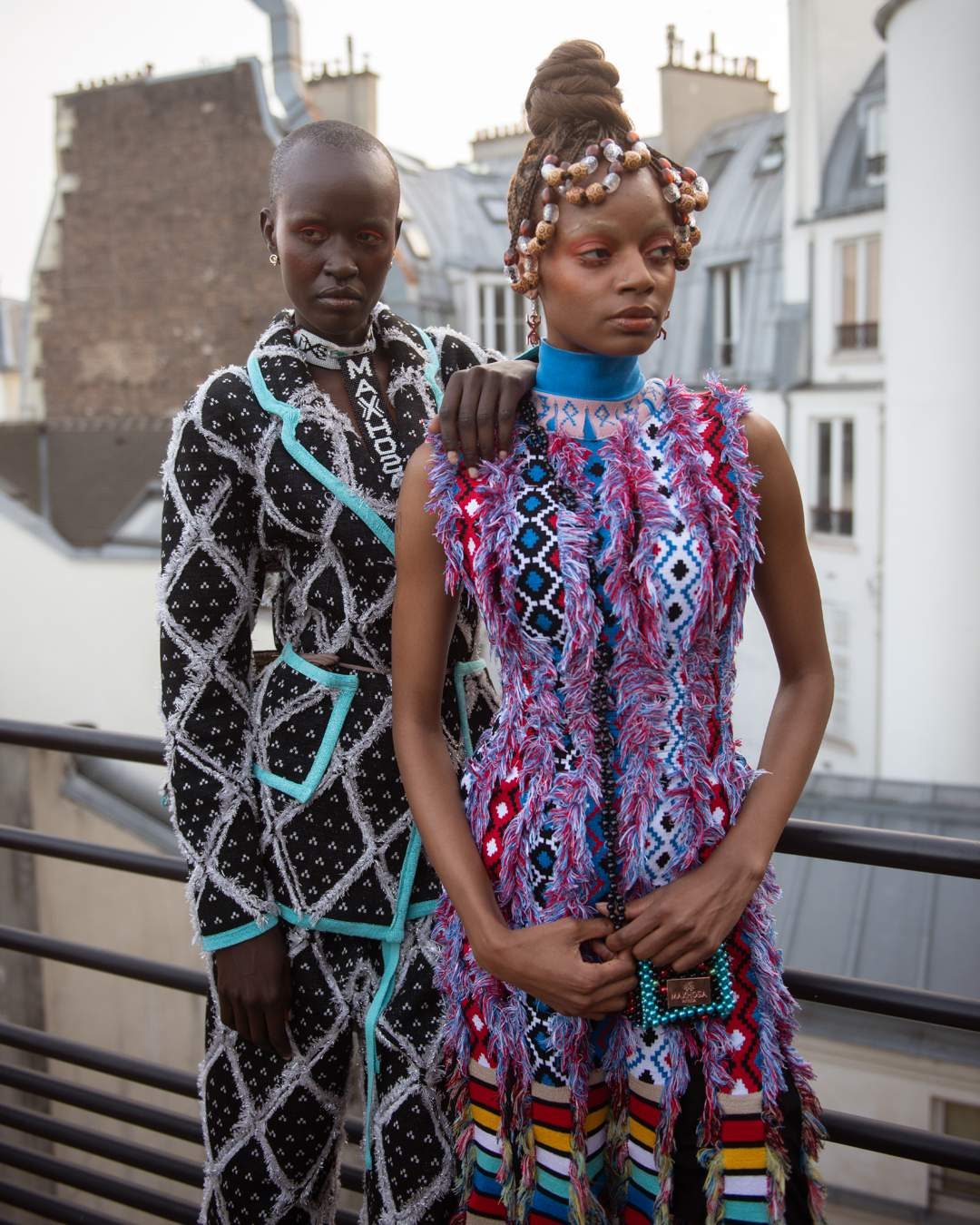
The show was staged at the South African ambassador’s residence in France. Reuters reported that the collection drew on MaXhosa’s familiar Xhosa-influenced geometry while widening its pan-African frame: garments carried the names of African countries, Kenyan artist Cyrus Kabiru contributed eyewear made from waste materials, and South African musician Sjava supplied the soundtrack.
For Ngxokolo, the runway also carried an industrial argument. The clothes were made with locally sourced wool and produced through the brand’s Johannesburg and East London operations. That matters because the international success of an African luxury house is a different proposition when design authorship, manufacturing ambition and cultural value remain connected to home.
The Fédération’s own interview with Ngxokolo frames the debut through ancestry. It records the show title as “Izihlwele Zivumile” — translated as “the ancestors have co-signed” — and notes references including Mpondo culture, Ngxokolo’s family roots and Cape Aloe from the Eastern Cape. The point was not to make heritage static. It was to make it mobile enough to travel without becoming anonymous.
That is why this is a meaningful update to MaXhosa’s Paris story rather than simply another fashion-week appearance. Yesterday, the question was what a full runway slot could mean. Today, the show has happened. A South African house has occupied the official Paris runway under its own name, with its own visual language and a production story that still points back to South Africa.
The harder work begins after the applause: converting symbolic visibility into durable global distribution, stronger African manufacturing and room for more designers from the continent. One runway cannot solve those structural questions. But it can change what the industry now knows is possible.
